Foreign digital companies and businesses expanding into Central Asia are increasingly encountering VAT obligations, particularly in jurisdictions that have strengthened rules for cross-border digital services. One of the countries with such rules and requirements in place is Kazakhstan.
However, as the digital economy grows, governments change or update their rules to keep up with the trends, and Kazakhstan is not an exception. As a result, businesses operating in Kazakhstan must understand the scope of taxable digital services and the key VAT obligations when supplying services into the country.
VAT Regulatory Framework
In 2021, Kazakhstan announced the implementation of the so-called “Google Tax” from January 1, 2022. The Google Tax refers to new VAT rules targeting foreign internet companies that sell goods or provide services to individuals in the country. Under these rules, any non-resident company operating through online platforms and earning revenue from Kazakh consumers must pay VAT to the state budget.
The VAT rate was set at 12%, and applies to the value of goods and services sold to individuals in Kazakhstan. While new rules had a significant impact on foreign businesses, the changes did not affect local taxable persons. To successfully enforce these rules, the government relies on financial transaction data provided by domestic banks, which track payments made to non-resident suppliers.
One of the key technical elements of the system was the introduction of a “Merchant ID” (MID), a unique identifier assigned to foreign companies that receive payments through electronic payment systems. The MID allows banks and the Tax Authority to accurately identify which non-resident company is receiving funds, making it easier to track taxable transactions and ensure VAT is properly collected.
The rules established a simplified registration process for in-scope companies. These rules were changed in 2025, when the Minister of Finance announced new rules on the conditional registration of a VAT-payer. More specifically, the new rules establish the procedure for the conditional VAT registration for foreign digital, or as stated in the rules, internet companies operating in the country.
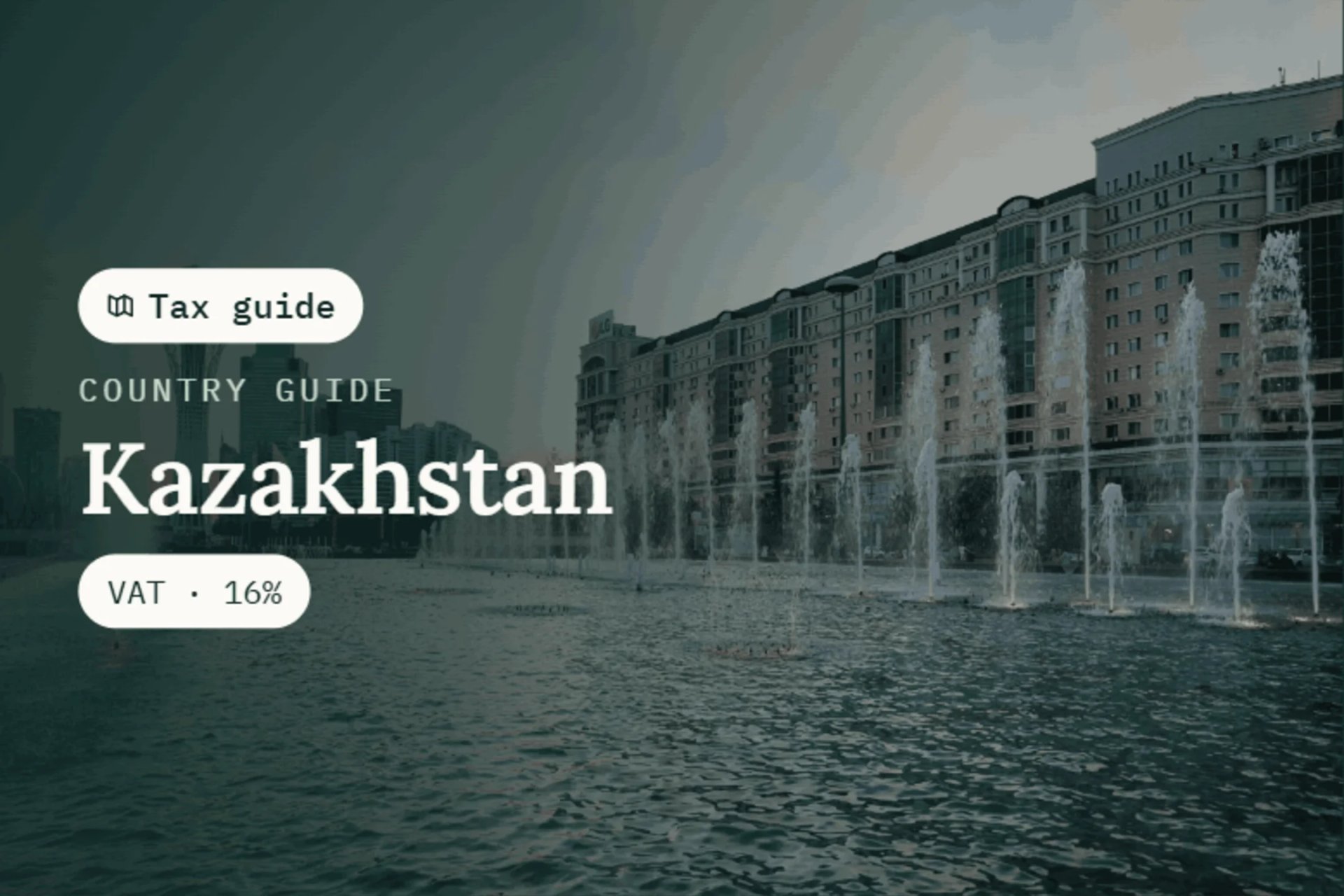
Additionally, the updated rules introduce key definitions, including internet platform, foreign company, and payment system identifiers, such as merchant name, merchant ID, and MCC code. The 2025 changes, which came into effect on January 1, 2026, also increased the applicable VAT rate from the initial 12% to 16%.
Taxable Digital Services and Scope
The scope of VAT in Kazakhstan for foreign digital providers includes a wide range of electronically supplied or digital services. In general, VAT applies to services delivered over the internet or electronic networks that require minimal human intervention. Common taxable digital services include software-as-a-service (SaaS) platforms, subscription-based streaming services, cloud computing, online advertising, mobile applications, digital marketplaces, and downloadable digital content such as e-books, music, and video.
Similar to other systems, Kazakhstan rules distinguish between B2C and B2B transactions. The system is designed to specifically target B2C transactions, where individuals are the final consumers, whereas for B2B transactions, reverse charge mechanisms apply.
VAT Obligations for Foreign Digital Service Providers
There are several key VAT obligations that foreign digital service providers must comply with when making taxable supplies to local consumers. The first one is registering for VAT. The previously simplified registration process has been replaced by the two-stage conditional VAT registration process.
In the first stage, known as the Confirmation Letter stage, the foreign supplier must act within one month after receiving its first payment from a consumer in Kazakhstan. During this phase, foreign companies must submit a notarized confirmation letter through the Integrated Tax Administration System.
The submission process is quite detailed and contains 16 specific business data elements that must be supported by legalized documentation. Supporting documents needed to complete the process include proof of company incorporation, evidence of tax registration in the company’s home country, and a notarized Power of Attorney, all of which must also be translated where necessary.
Once the submitted documentation is reviewed and accepted, the second stage, which involves the assignment of a Business Identification Number (BIN), begins. In this stage, the Ministry of Justice issues the BIN within one working day of approval. This is followed by the State Revenue Committee updating the official public register of foreign online suppliers and issuing an updated Confirmation Letter within three business days.
Once registered, foreign digital providers must file a quarterly VAT return and pay due taxes by the 25th day of the second month following the quarter in which the sale of goods and services was carried out.
The 16% VAT rate applies when the consumer’s place of residence is in Kazakhstan, the bank account used for payment is held with a bank located there, the customer’s IP address used during the purchase is registered in the country, and if the telephone number used for purchasing or paying for the service has an international dialing code assigned there.
Key Takeaways for Foreign Businesses
The VAT rules and requirements for online businesses are evolving, and governments are making necessary changes to adapt to new circumstances and new business models. Therefore, foreign digital providers must always be alerted and monitor any regulatory changes that may impose additional obligations on them.
Some of the key things digital companies operating in Kazakhstan need to determine are whether their customers are located in the country and whether their services fall within the scope of Kazakh VAT rules. If the answer to both questions is affirmative, then they should ensure that they register for VAT in time and include all the required data and documentation with their VAT registration application.
Those who fail to comply with these rules or ignore communications from the Tax Authorities may face blocked access to their internet resources, such as their website or digital platform. Nonetheless, even if this happens, once the foreign company remedies the violations, such as completing the required registration or responding to the authorities, access to the internet resource can be restored through the official procedure.
Source: Ministry of National Economy of the Republic of Kazakhstan, VATabout, PwC, EY, KPMG