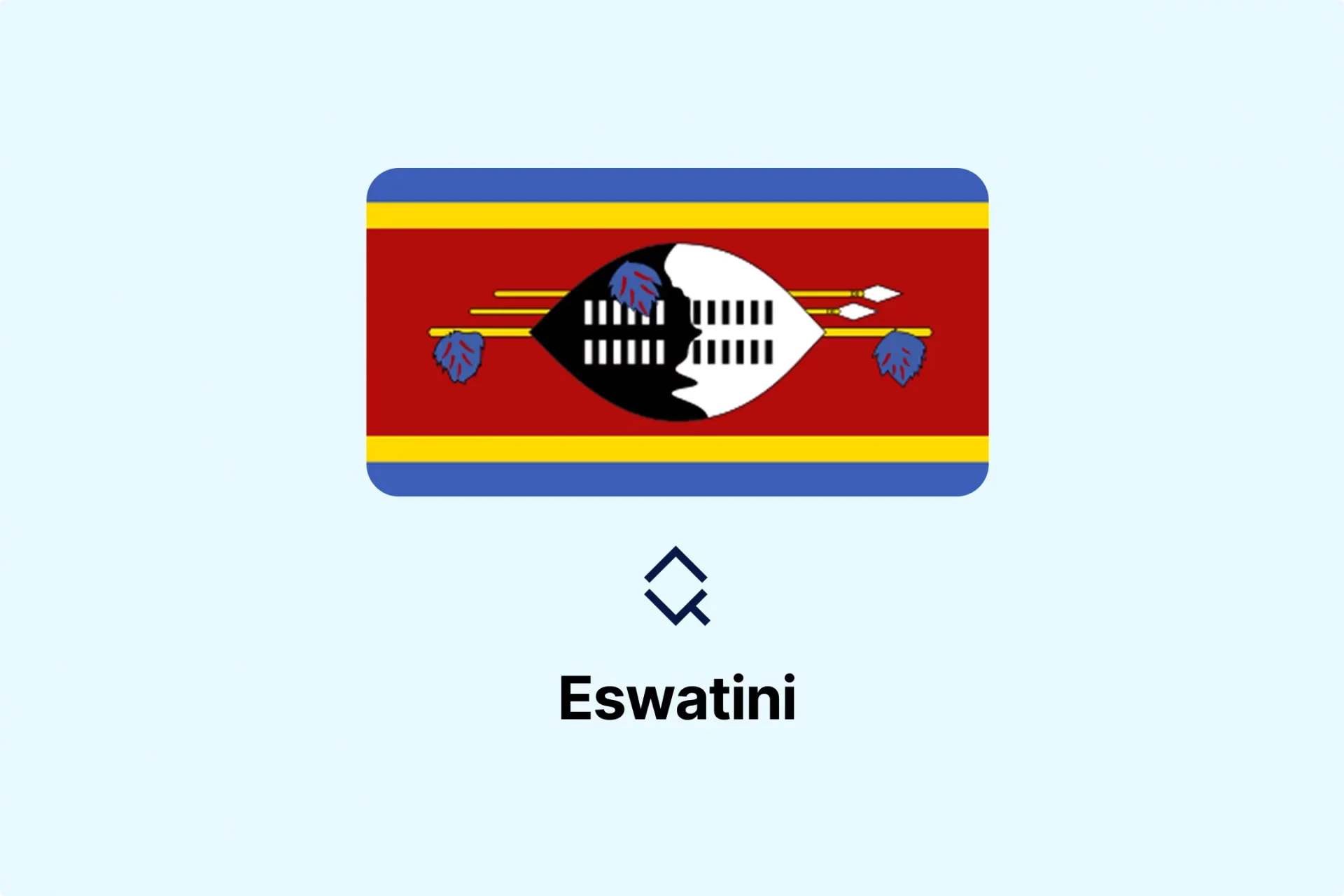
The Eswatini, formerly known as Swaziland, Ministry of Finance, published the 2026 Budget Speech titled “Agape Love - Love in Action for Economic Transformation," framing fiscal policy as a moral commitment to the nation's citizens. The main focus of the Budget Speech concerning indirect tax measures includes an overview of the results of already implemented measures and general plans to close the compliance gap.
Indirect Tax Measures and Performance
The Ministry of Finance underlined that the government introduced targeted VAT reforms to ease the cost of living and improve fairness in the tax system. Main measures introduced include increasing the VAT-exempt threshold for goods brought into the country at the border from E 1,000 (around USD 58) to E 10,000 (around USD 580), expanding the list of exempt goods, and zero-rating essential items such as sanitary products, reusable nappies, and certain medical supplies.
In addition to reducing financial burden on households while also encouraging more honest declarations and better compliance, these measures are expected to support stronger revenue performance, with overall tax collections projected to grow by 13.2% in the 2025/26 financial year. Nonetheless, a vital compliance gap estimated at around E 4 billion (around USD 232.8 million) annually remains. Moreover, VAT in the wholesale and retail sectors is particularly vulnerable.
Notably, the government's focus is on improving enforcement and compliance rather than increasing tax rates, aiming for a fairer system that does not penalize already compliant taxable persons. The Ministry also expects VAT collections to increase by 24.8%, from E 5.85 billion (around USD 340.5 million) in 2025/26 to E 7.30 billion (around USD 425 million) in 2026/27, a nearly USD 84 million increase.
The only new measure announced is a 3.39% increase in excise duties on alcohol and tobacco products, applied immediately to align with South Africa as part of the Southern African Customs Union (SACU) revenue pool. However, this decision should be viewed more as a necessary move rather than a domestic policy choice.
Conclusion
The result presented in the 2026 Budget Speech shows that Eswatini's policy on indirect tax is broadly neutral to slightly progressive. The overall message is that there will be no rate increases, that zero-rating of essentials will be maintained, and that the focus will be on closing the compliance gap rather than raising taxes on already-compliant businesses and consumers.
Source: Eswatini 2026 State Budget