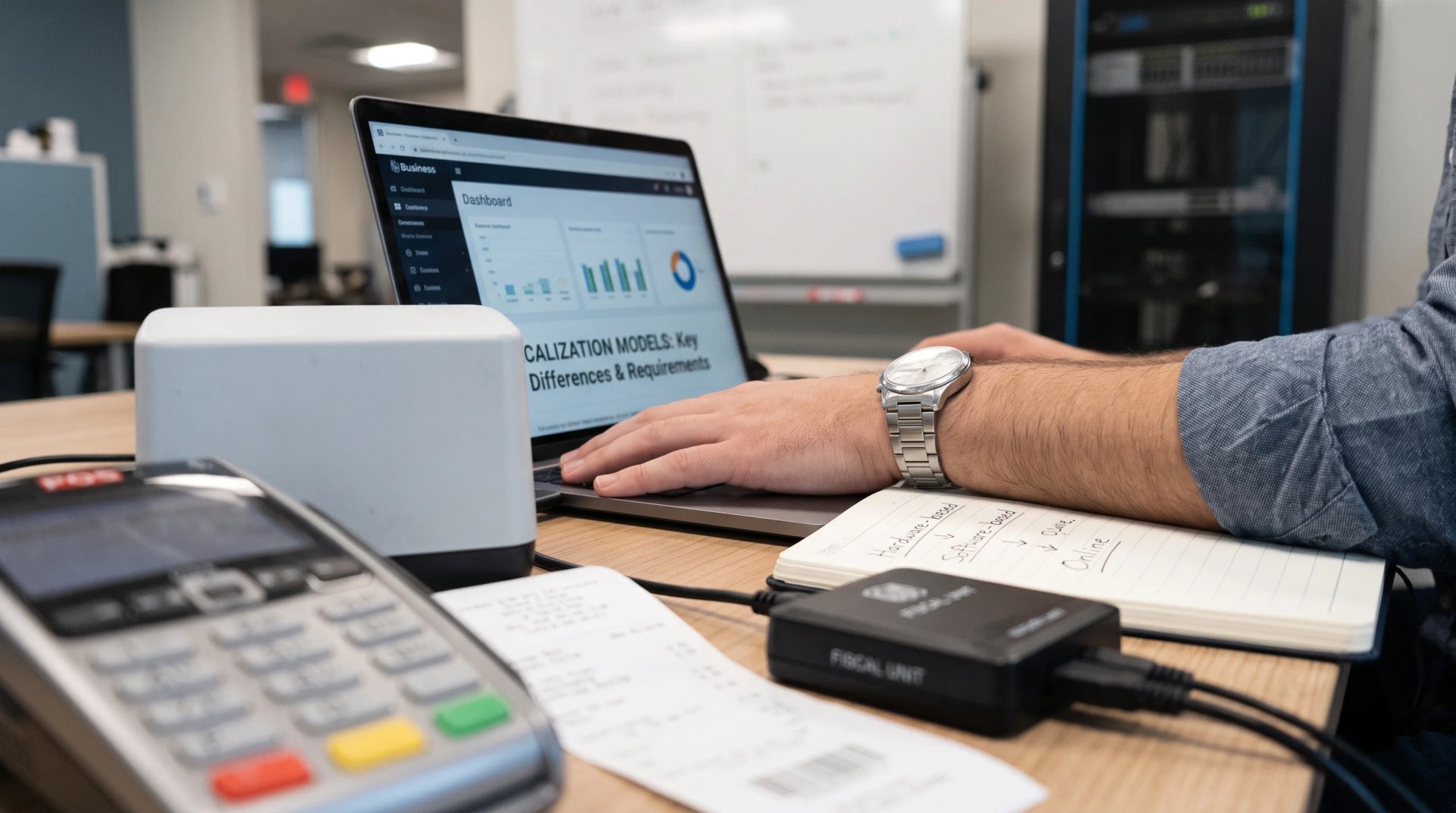
La fiscalización puede definirse como un conjunto de normas legales y técnicas que se utilizan para hacer un seguimiento de los registros fiscales, controlar los datos de las operaciones y respaldar el cálculo y la recaudación correctos de los impuestos. Aunque los sistemas nacionales difieren, normalmente definen qué contribuyentes están incluidos, qué documentos fiscales pueden emitirse, cómo deben registrarse y almacenarse los datos de las operaciones y si la información debe comunicarse a la administración tributaria.
La fiscalización puede agruparse en cuatro grandes modelos: basada en hardware, basada en software, combinada de hardware y software, y en línea. La principal diferencia radica en dónde tiene lugar el control fiscal y cómo se protege, almacena y reporta la información de las operaciones. En todos los modelos, la información tributaria forma parte del registro fiscal de la operación y debe mantenerse coherente con el recibo y los datos de POS relacionados.
Requisitos comunes a los modelos de fiscalización
La fiscalización refuerza el control sobre el volumen de negocio del comercio minorista y reduce las posibilidades de manipular los datos de las operaciones. Las normas suelen regular la emisión de recibos, los elementos obligatorios, el registro de las operaciones, el almacenamiento, la comunicación con las autoridades y las auditorías.
La información del IVA o del GST forma parte del registro de la operación. Según el modelo, puede ser procesada por un dispositivo fiscal o una aplicación POS, almacenarse localmente o en la nube, transmitirse a la administración tributaria y remitirse a los sistemas de contabilidad. Los registros fiscales también pueden abarcar otros tratamientos tributarios, como los impuestos especiales, las exenciones y determinadas operaciones con clientes extranjeros.
Fiscalización basada en hardware
La fiscalización por hardware se basa en un dispositivo fiscal aprobado oficialmente, como una caja registradora electrónica o una impresora fiscal. El POS proporciona los datos fiscales al dispositivo, que procesa la información conforme a las normas legalmente definidas. Si el dispositivo fiscal imprime el recibo, su firmware puede determinar el diseño, los elementos obligatorios, el orden de la información y otras limitaciones técnicas.
Los datos fiscales suelen almacenarse en una memoria fiscal a prueba de manipulaciones o en un diario fiscal. Algunos sistemas de hardware también envían información a la administración tributaria, aunque no necesariamente en tiempo real. El cálculo y el reporte del IVA deben coincidir entre el dispositivo fiscal, el sistema POS y, cuando proceda, los datos de que dispone la autoridad.
Entre los requisitos importantes suelen figurar la homologación del dispositivo, el registro antes de iniciar las ventas, el mantenimiento, el servicio técnico autorizado y unas normas de reporte definidas. Dado que muchas funciones están controladas por el dispositivo, este modelo es, por lo general, menos flexible.
Fiscalización basada en software
La fiscalización por software traslada la principal función de cumplimiento a la aplicación POS. Por lo general, no se requiere hardware fiscal dedicado, pero el software puede necesitar una certificación oficial que abarque ámbitos como el procesamiento de datos, la seguridad, la firma digital, el encadenamiento de operaciones, el acceso y el registro en diario.
Los datos fiscales los almacena principalmente el comerciante, mientras que las normas locales pueden definir el formato del diario, el formato de exportación y el periodo de conservación. Cuando se incluye el reporte en línea, los datos también pueden ser almacenados por la administración tributaria. El cálculo y el reporte del IVA deben mantenerse coherentes con los registros fiscales.
Este modelo puede admitir POS estándar, POS móvil, tiendas en línea, autopago y máquinas expendedoras. Los diseños de los recibos son más flexibles, aunque los comerciantes deben utilizar la versión certificada del software y cumplir los requisitos locales de almacenamiento y reporte.
Fiscalización combinada de hardware y software
La fiscalización combinada utiliza tanto un hardware definido como funciones de software obligatorias. El POS suministra los datos de la operación a un dispositivo fiscal o a un servicio predefinido, mientras que la firma digital, el encadenamiento de operaciones, la memoria fiscal, un diario fiscal o el almacenamiento en la nube pueden proteger la integridad de los datos.
La información fiscal se almacena normalmente en el dispositivo o en la nube y también en el sistema POS. La operación registrada y el recibo impreso deben coincidir, incluido el cálculo del IVA. Según el país, puede no exigirse una comunicación directa con la administración tributaria, pero las exportaciones de datos fiscales pueden seguir siendo obligatorias para el reporte o las auditorías.
Este modelo ofrece más flexibilidad que la fiscalización tradicional basada solo en hardware, aunque conserva los requisitos de dispositivos o servicios aprobados, registro y mecanismos de seguridad específicos.
Fiscalización en línea
La fiscalización en línea sitúa por lo general a la administración tributaria directamente en el flujo de la operación. Suele emplear una comunicación bidireccional basada en un modelo de solicitud-respuesta: la información fiscal se firma digitalmente y se transmite en línea, y la autoridad devuelve una respuesta de autorización o validación vinculada a la operación.
Los datos fiscales se almacenan en la administración tributaria, lo que permite el acceso remoto a la información reportada. La comunicación puede ser directa y en tiempo real, y los recibos pueden incluir códigos de seguridad o de autorización. Los modelos en línea no suelen requerir equipos fiscales dedicados.
La conectividad es una cuestión operativa clave. Las normas suelen definir cómo se emiten los recibos durante los periodos sin conexión, cómo se almacenan las operaciones y cuándo deben transmitirse o reautorizarse posteriormente. El cálculo y el reporte del IVA deben seguir coincidiendo con los datos fiscales de la operación.
Conclusión
Los cuatro modelos de fiscalización utilizan tecnologías distintas, pero persiguen el mismo objetivo: un registro fiable de las operaciones minoristas y un mayor control sobre la información tributaria. Los sistemas de hardware sitúan el control en dispositivos aprobados, los de software en aplicaciones certificadas, los modelos combinados lo reparten entre hardware y software, y los sistemas en línea conectan la operación directamente con la administración tributaria.
Para los comerciantes, las cuestiones esenciales son dónde se procesan y almacenan los datos fiscales, si las operaciones deben transmitirse a la autoridad, qué certificación o registro se exige y cómo debe reflejarse la información del IVA en el registro fiscal.