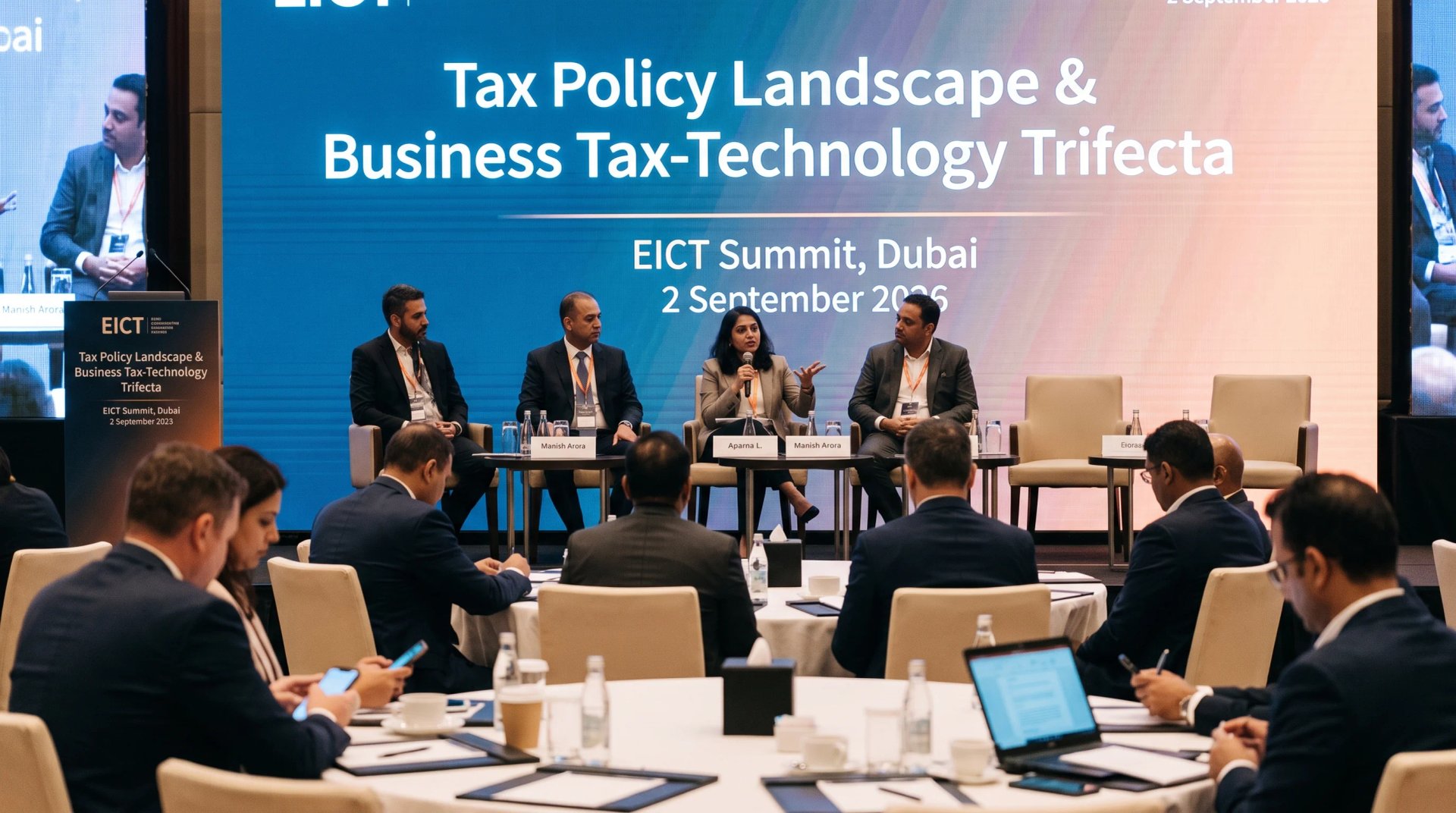
Der E-Invoicing Compliance and Tax Technology (EICT) Summit in Dubai am 2. September 2026 fiel in einen heiklen Moment für den Markt der VAE: Große Unternehmen haben bis zum 30. Oktober 2026 Zeit, einen Accredited Service Provider (ASP) zu benennen, der verpflichtende Go-live folgt am 1. Januar 2027 – und dennoch berichteten viele Sponsoren der Veranstaltung, dass bis zur Eröffnung des Summits erst ein kleiner Teil der Unternehmen diese Benennung tatsächlich abgeschlossen hatte. Diese Lücke gab den Ton an. In den meisten Sessions ging es nicht darum, irgendjemanden davon zu überzeugen, dass die E-Rechnung kommt – das wusste jeder im Raum bereits; es ging darum, was nach ihrer Einführung typischerweise schiefgeht und wer dafür zuständig ist, das aufzufangen.
Bereitschaft beginnt bei der Datenverantwortung, nicht bei der Software
Nimish Makvana, Mitgründer und Präsident der Taxation Society UAE, eröffnete mit einer Warnung an kleinere Unternehmen: Wer zu lange wartet, gerät nicht nur beim Papierkram in Rückstand, sondern strukturell. Zu den eigentlichen Ursachen zählte er schlechte Daten, veraltete Altsysteme und die fehlende Einigung darüber, wer in Finanzen, Steuern oder IT wofür zuständig ist. Das kommt jedem bekannt vor, der schon einmal eine Bereitschaftsanalyse durchlaufen hat. Sein Rat war unmissverständlich: Führen Sie die Gap-Analyse jetzt durch, nicht erst, wenn die Pflicht in Kraft tritt.
Krishnan Narayanan Venkat, Partner bei Andersen UAE, brachte es später am Tag noch deutlicher auf den Punkt: "Die Rechnung ist die letzte Meile. Die eigentliche Transformation findet in Ihren Daten, Ihren Systemen und der Frage statt, wem sie gehören."
Das Steuerpolitik-Panel: ein Geschäftsmodell-Thema, kein Compliance-Thema
Ein Panel rückte diese Spannung besonders in den Fokus: "Tax Policy Landscape & Business Tax-Technology Trifecta", moderiert von Venkatakrishnan Rajagopalan (Group Head of Taxation, Saudi German Health UAE), mit Manish Arora (Adidas), Preeti Ambwani (NMDC Group), Nauman Asif Mian (Bayt.com), Aparna L. (GFG Alliance) und Saurabh Taparia (Dubai Holding Group) – fünf Fachleute aus Einzelhandel, Industrie, Gesundheitswesen und diversifizierten Beteiligungsgesellschaften, die sonst selten gemeinsam auf einem Panel sitzen.
Rajagopalan fasste seine eigene Erkenntnis im Anschluss so zusammen: Steuerpolitik "kann nicht länger getrennt von Geschäftsentscheidungen und Technologiegestaltung stehen." Je näher die Meldung an die eigentliche Transaktion rücke, so sein Argument, desto früher als bisher müsse sich die Steuerfunktion in Rechnungsstellung, Systeme und die Gestaltung kommerzieller Prozesse einbringen. Saurabh Taparia formulierte es zugespitzter: "Standardisieren Sie das Rückgrat, aber nicht die Geschäftsrealität." Technologie ermögliche die Transformation, sagte er, doch erst die Rechenschaftspflicht setze sie tatsächlich um.
Aparna L.s Beitrag war leiser, blieb aber länger haften: Entscheidungen müssten so gut dokumentiert werden, dass sich Monate später nicht nur das Ergebnis, sondern die dahinterstehende Begründung nachvollziehen lasse. Eine kleine Anforderung, an der die meisten Compliance-Teams scheitern – und genau für diese Lücke entstehen inzwischen Werkzeuge wie OneSig Atlas, die das "Warum" gemeinsam mit dem Beleg selbst festhalten. Kalaiarasan Manoharan (Kalai) von Complyance, der vom Bühnenrand aus zusah, hielt die eigentliche Geschichte für die Einigkeit selbst: Ein Steuerdirektor aus dem Einzelhandel, ein Verantwortlicher aus der Industrie und ein CFO aus dem Gesundheitswesen sind sich operativ selten in vielem einig – und hier kamen sie zum selben Schluss: Das ist ein Wandel des Geschäftsmodells, keine Compliance-Übung.
Wie Bereitschaft auf Schema-Ebene in der Praxis aussieht
Kalais eigene Session später am Tag zeigte, wie das in der Praxis konkret aussieht. Sein Beispiel: Eine wiederkehrende Rechnung enthält einen Mengeneinheiten-Code, den das FTA-Gateway nicht akzeptiert. Wird das schlecht gehandhabt, fällt es niemandem auf, bis beim Periodenabschluss der Abgleich erfolgt – Wochen später. Wird es hingegen gut gehandhabt, löst innerhalb von Sekunden ein Webhook aus, der ERP-Datensatz wechselt in den Status "Hold", und beim AR-Sachbearbeiter landet eine Aufgabe, die genau das fehlerhafte Feld benennt; sie wird noch am selben Tag korrigiert und mit vollständigem Audit-Trail erneut eingereicht. Ein eng gefasstes Beispiel, aber genau darum geht es: Die meisten Implementierungszeitpläne scheitern nicht am großen Ganzen, sondern an genau solchen Details – daran zu wissen, welche Felder tatsächlich fehlschlagen, bevor es passiert.
Women in Tax Tech: dieselbe Schlussfolgerung, ein anderer Blickwinkel
Ein eigenes Panel, "Trailblazing Women in Tax Tech", betrachtete dieselbe Transformation von der personellen statt von der prozessualen Seite: Seema Sharma (Group Head Tax and ESG, Network International), Asiya Zargar (Group Head of Tax, Mantrac Group), Elisa María Del Palacio Acosta (S Group Tax Manager, The Sanad Group), Chiara Furfari (Vice President Corporate & International Tax, Mashreq) und Vanita Nagpal (Associate Director, MMJS Consulting), moderiert von Saranya Kadakkathu.
Die Steuerwelt zieht ihre führenden Stimmen seit jeher aus einem sehr vertrauten Muster. Sechs Frauen aus Führung, Unternehmertum und indirekter Besteuerung an der Spitze der Diskussion zu sehen, sollte man nicht als Wohlfühl-Höhepunkt abheften. Die Diskussion machte eines deutlich: Den klügsten Köpfen das Mikrofon zu geben, unabhängig vom Geschlecht, ist keine kühne neue Initiative, sondern schlicht gesunder Menschenverstand, der längst überfällig war.
Del Palacio Acosta betonte, das Gespräch reiche weit über Technologie hinaus: dahin, wo AI wirklich Wert schafft, im Gegensatz zu den Bereichen, in denen der Hype ihr vorausgeeilt ist – und dazu, was nötig ist, um die Steuerfunktion vom reinen Compliance-Dienstleister zum strategischen Partner umzupositionieren. Furfari wurde persönlicher. Sie sprach darüber, oft die einzige Frau und häufig die jüngste Person im Raum zu sein, und über die gemeinsame Beobachtung des Panels: Frauen neigen dazu, sich erst dann auf eine Stelle zu bewerben, wenn sie vollständig qualifiziert sind, während Männer sich bewerben, sobald sie einen Bruchteil der Anforderungen erfüllen.
Die E-Rechnung als organisatorisches Audit
Ekansh Agrawal, Gründer und CEO von ScaleX Tax und ein prominenter Redner des Summits, ordnete die Pflicht auf eine Weise ein, die es wert ist, wiederholt zu werden: Dies sei kein IT-Update, das man bestehenden Prozessen aufsetzt, sondern ein Anlass, der dazu zwingt, grundlegend zu überprüfen, wie Rechnungen bisher überhaupt ausgestellt wurden – und ob sie von Anfang an je vollständig regelkonform waren. Diese Unterscheidung zwischen Compliance-Projekt und Technologieprojekt war wohl der nützlichste Blickwinkel des Tages.
Die wichtigsten Erkenntnisse
Fasst man alles zusammen, wiederholte sich ein Punkt: Die Unternehmen, die wirklich vorbereitet sind, behandelten das Thema lange als Daten- und Governance-Frage, bevor sie es als Softwarekauf betrachteten. Der 30. Oktober 2026 ist ein festes Datum, und nach Aussage der Sponsoren selbst verhalten sich zahlreiche Unternehmen noch immer so, als sei er es nicht. Wem die Daten gehören, warum eine Entscheidung getroffen wurde und nicht nur, welche – wer geradesteht, wenn etwas zurückkommt: Das war das eigentliche Gespräch in Dubai, unterhalb der Agenda.