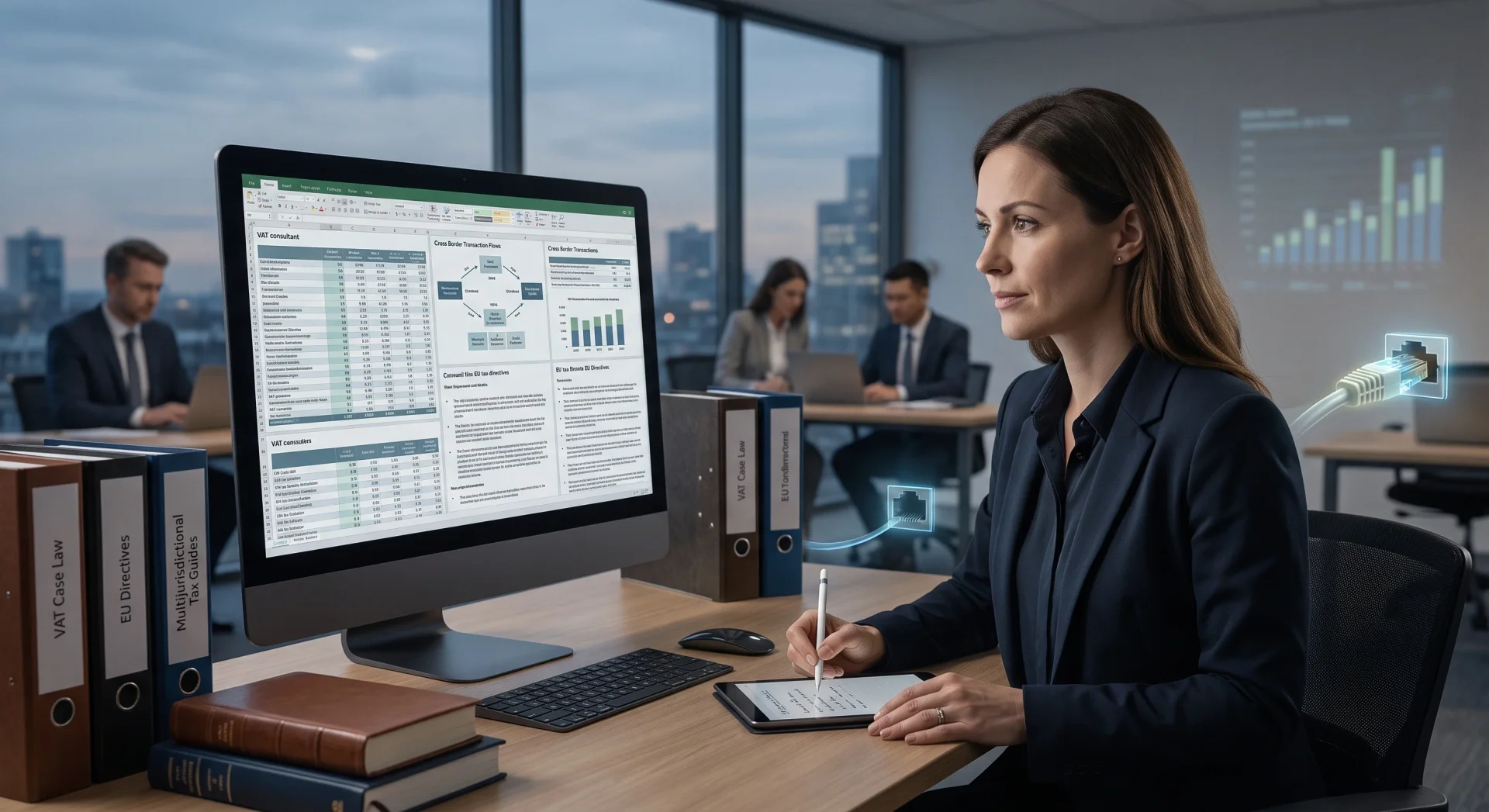
Wie viele andere professionelle Dienstleistungen durchlaufen auch die Umsatzsteuerberatung und -beratungspraxis eine Phase des strukturellen Wandels. Jahrzehntelang stützte sich der Berufsstand weitgehend auf Fachwissen, manuelle Steuerrecherche, Tabellenkalkulationen, Compliance-Prüfungen und die wiederholte Analyse ähnlicher Transaktionen in unterschiedlichen Jurisdiktionen. KI verändert, wie diese Arbeit erledigt wird, während die zunehmende Digitalisierung der Umsatzsteuer verändert, was Unternehmen von ihren Beratern erwarten.
Sowohl Fachleute als auch Regulierungsbehörden führen KI rasch ein. Thomson Reuters berichtete 2025, dass 79% der Fachkräfte in Steuer-, Wirtschaftsprüfungs- und Buchhaltungsgesellschaften erwarteten, dass KI innerhalb von fünf Jahren starke oder transformative Auswirkungen auf ihre Branche haben werde. Zugleich setzen auch die Steuerverwaltungen auf KI: Die OECD berichtete, dass 69% der Steuerverwaltungen 2023 bereits KI einsetzten, während weitere 24% sie gerade implementierten.
Das verweist auf eine wichtige Tatsache: KI ist mehr als ein vorübergehender Trend; sie ist ein transformatives Werkzeug für Fachleute. Umsatzsteuerberater und -beraterinnen müssen sorgfältig damit umgehen, wie sie KI in ihrem Tagesgeschäft implementieren und nutzen. Obwohl es sich um eine vielversprechende Technologie handelt, die Umsatzsteuerfachleuten das Leben erleichtern kann, birgt sie durchaus Risiken.
Von abrechenbarer Recherche zu technologiegestützter Beratung
Die klassische Umsatzsteuerberatung ist oft mit erheblichem Rechercheaufwand verbunden. Ein Berater muss für eine bestimmte Transaktion mitunter den Ort der Leistung, die Umsatzsteuerpflicht, die Registrierungspflicht, den anwendbaren Steuersatz, die Rechnungsanforderungen oder die meldetechnische Behandlung ermitteln. Dieser Prozess kann die Durchsicht von Gesetzgebung, Verwaltungsanweisungen, Rechtsprechung und weiteren Quellen erfordern – in komplexeren Fällen über mehrere Jurisdiktionen hinweg.
Richtig eingesetzt, kann KI den Zeitaufwand für viele dieser Schritte deutlich reduzieren. Generative AI-Tools können große Informationsmengen durchsuchen, zusammenfassen und vergleichen. Spezialisierte Steuertechnologie kann noch weiter gehen, indem sie Gesetzgebung, Steuerdatenbanken und Unternehmensdaten in einem einzigen Workflow zusammenführt.
Infolgedessen dürften Umsatzsteuerfachleute zunehmend weniger Zeit darauf verwenden, die einschlägige Regel zu finden, und mehr Zeit darauf, zu bestimmen, wie diese Regel auf das Geschäftsmodell, die Systeme, die Verträge und die Transaktionen eines Mandanten anzuwenden ist. Letztlich markiert dies den Übergang von abrechenbarer Recherche hin zu technologiegestützter Beratung.
Die am ehesten automatisierbaren Aufgaben der Umsatzsteuerberatung
Nicht alle Aufgaben und Tätigkeiten eignen sich für die Automatisierung. Am besten geeignet sind repetitive, strukturierte und datenintensive Aufgaben wie die Prüfung von Registrierungspflichten, die Klassifizierung von Transaktionen, die Bestimmung des Umsatzsteuersatzes, Rechnungsprüfungen, Compliance-Kalender und die Erstellung von Standarddokumentation.
KI kann Dokumente wie Verträge, Rechnungen, Transaktionsaufzeichnungen und Gesetzestexte analysieren, die Daten anschließend interpretieren und potenzielle umsatzsteuerliche Fragestellungen zur menschlichen Prüfung kennzeichnen. Sie kann zudem Informationen über verschiedene Systeme hinweg vergleichen und Abweichungen hervorheben, die andernfalls erheblichen manuellen Aufwand erfordern würden. Der Aufstieg der E-Rechnung und digitaler Umsatzsteuer-Meldesysteme, wie sie etwa im Rahmen der EU-ViDA-Umsatzsteuerreform geplant sind, wird den Bedarf an Abgleich und Verifizierung von Daten nur weiter erhöhen – ein Bereich, in dem KI eine wesentliche Rolle spielen wird.
Neue Chancen durch KI
Umsatzsteuerfachleute mögen sich durch KI unter Druck gesetzt oder bedroht fühlen, doch die Automatisierung schafft auch neue Chancen. Wenn Routineanalysen schneller werden, können Berater mehr Ressourcen für komplexe Fragen, Implementierungsprojekte und strategische Beratungsleistungen einsetzen.
Eine der vielversprechendsten Chancen ist die kontinuierliche Überwachung umsatzsteuerlicher Risiken, die sich weitgehend automatisieren lässt. KI-Systeme könnten zentrale Umsatzsteuerdaten anhand der anwendbaren umsatzsteuerlichen Regeln überwachen und analysieren und dabei ungewöhnliche Behandlungen, fehlende Informationen oder potenzielle Compliance-Risiken erkennen. Sobald das System ein potenzielles Risiko kennzeichnet, können Berater und Beraterinnen gezielt einzelne Fälle näher untersuchen, anstatt jede Transaktion manuell zu prüfen.
Die Überwachung umsatzsteuerlicher Änderungen ist besonders für international tätige Unternehmen entscheidend, die in mehreren Jurisdiktionen agieren. Mithilfe von KI könnten Umsatzsteuerfachleute eine zentralisierte Übersicht über zentrale Anforderungen in zahlreichen Jurisdiktionen schaffen – einschließlich Registrierung, Rechnungsstellung, Umsatzsteuersätzen und Meldepflichten – und sich auf die jurisdiktionsspezifische Auslegung und Umsetzung konzentrieren.
Die veränderte Ökonomie der Umsatzsteuerberatung
KI verändert nicht nur, wie die Arbeit erledigt wird, sondern auch, wie Umsatzsteuerberatungs- und -beratungsleistungen bepreist und erbracht werden. Traditionell wurde das Beratungshonorar auf Basis eines Stundensatzes berechnet. Je mehr Stunden für die Recherche aufgewendet wurden, desto höher das Honorar. Wenn KI jedoch den Zeitaufwand für Recherche und Routineanalysen reduziert, könnte dieses Modell weniger tragfähig werden.
Folglich dürften Umsatzsteuerberatungsgesellschaften stattdessen zunehmend Festpreis- oder abonnementbasierte Vergütungsmodelle anbieten. Das bedeutet nicht, dass Beratung an Wert verliert. Technologie kann es diesen Unternehmen ermöglichen, mehr Mandanten zu betreuen, größere Datensätze zu analysieren und Leistungen anzubieten, die zuvor zu teuer oder zu zeitaufwendig gewesen wären. Im Kern verschiebt sich das Preismodell von der Frage, wie viele Stunden abgerechnet werden können, hin zu der Frage, wie viel messbarer Wert durch die Kombination von Technologie und fachlicher Expertise geliefert werden kann.
Menschliche Expertise vs. KI: Wo jede ihren Wert entfaltet
Die OECD Tax Policy Reforms 2026 verweisen auf den Wandel von der klassischen Umsatzsteuer-Compliance hin zu digital gesteuerten Umsatzsteuersystemen, bei denen nicht ansässige Lieferanten, Online-Plattformen und elektronische Transaktionsdaten für die Steuerverwaltungen zunehmend an Bedeutung gewinnen. Obwohl KI eine wichtige Rolle in der Steuer-Compliance spielen wird, bleibt die Umsatzsteuer ein komplexes, regelbasiertes Gebiet.
Konkret kann die Gesetzgebung Ausnahmen enthalten, die Verwaltungspraxis kann zwischen Jurisdiktionen abweichen, und die korrekte Behandlung kann von Sachverhalten abhängen, die aus den Transaktionsdaten nicht unmittelbar ersichtlich sind. In solchen Situationen bleibt das menschliche Urteilsvermögen unverzichtbar. Berater müssen beurteilen, ob eine KI-generierte Auslegung durch verlässliche Quellen gestützt wird, den kommerziellen Kontext verstehen und den Mandanten die Konsequenzen unterschiedlicher Vorgehensweisen vermitteln.
Zudem stellen sich wichtige Fragen zu Vertraulichkeit, Datensicherheit, Richtigkeit, Verantwortlichkeit und Governance. Die OECD hat betont, dass KI in der Steuerverwaltung vertrauenswürdig, transparent und rechenschaftspflichtig sein sollte und dass KI mit menschlicher Expertise verzahnt und nicht als eigenständige Technologie betrachtet werden sollte.
Für Umsatzsteuerfachleute bedeutet dies, dass KI-Governance Teil der fachlichen Qualitätssicherung werden wird. Die menschliche Prüfung dürfte bei wesentlichen Beratungsleistungen, unsicheren Auslegungen und risikoreichen Transaktionen weiterhin unverzichtbar bleiben.
Der Umsatzsteuerberater der Zukunft
Der Umsatzsteuerberater der Zukunft wird ein hybrider Profi sein, der tiefes steuerfachliches Know-how mit Technologiekompetenz und kommerziellem Gespür verbindet. KI wird seinen Fokus von manueller Compliance und Recherche hin zu hochwertiger Beratung, Dateninterpretation und Risikomanagement verlagern. Erfolg wird denen zuteil, die KI nutzen, um effizienter zu arbeiten, und zugleich das menschliche Urteilsvermögen, die Empathie gegenüber Mandanten und die ethische Aufsicht bieten, die Technologie nicht nachbilden kann.