Can a single physical shipment of petroleum products support two successive sales with zero-rated VAT? In Case T‑614/25, Latvian-based company Trading 4 challenged the tax authorities over intra-Community VAT exemptions in a complex triangular chain transaction involving intermediaries in Estonia and the UK.
Background of the Case
Between January 2016 and January 2017, Trading 4 sold petroleum products to companies based in Estonia and the UK. Notably, Estonian and UK companies did not physically receive the goods and then resell them. On the same days that they purchased the petroleum products from Trading 4, they resold them to other businesses located in different EU countries. Therefore, the goods were transported directly from Trading 4 in Latvia to final purchasers, meaning there was only one physical movement of goods despite there being two successive sales.
This created a chain transaction: Trading 4 → Estonian and UK companies → final purchasers in multiple EU countries.
The Latvian Tax Authority disagreed with Trading 4’s treatment of the transactions as 0% intra-EU supplies. It argued that taxable persons in Estonia and the UK had already transferred ownership of the petroleum products to their customers in other EU countries, before the goods left Trading 4’s warehouse.
Since Trading 4 knew that the goods were being immediately resold and transported directly to final purchasers, the Tax Authority concluded that Trading 4’s own sales to Estonian and UK companies were actually domestic supplies in Latvia and should have been subject to the standard Latvian VAT rate.
The Tax Authority also argued that Estonian and UK companies should have been VAT-registered in Latvia because of these transactions. In addition, it considered that Trading 4 knew enough about the structure of the transactions to have participated in a VAT fraud or evasion scheme. Consequently, in June 2019, the Tax Authority issued a decision requiring Trading 4 to apply the standard VAT rate to the disputed supplies and imposed additional corrective measures.
Trading 4 challenged the decision before the Latvian Regional Administrative Court, maintaining that its sales to Estonian and UK companies were genuine intra-Community supplies and therefore correctly benefited from the 0% VAT rate.
However, in February 2024, the court rejected Trading 4’s appeal. It concluded that the supplies from Trading 4 to Estonia and the UK had taken place within Latvia, meaning Latvian standard-rate VAT applied. The court considered that ownership passed from Trading 4 to those companies when the goods were handed over to the carrier.
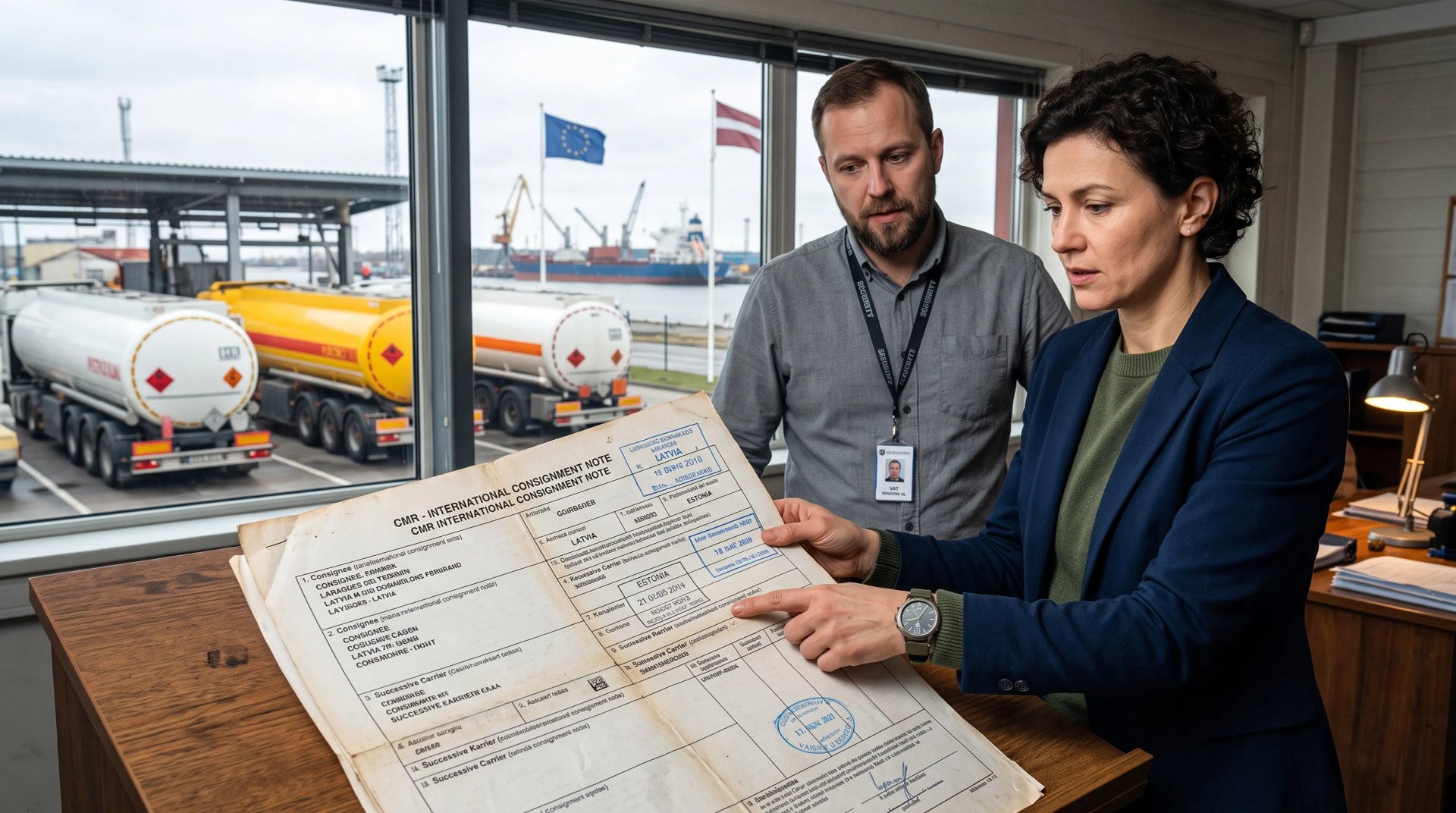
A particularly important piece of evidence was the CMR international consignment note. Estonian and UK companies had asked Trading 4 to include information about the final customers on the CMR documents. According to the Court, this meant Trading 4 should have understood that the petroleum products were being immediately resold and transported to other EU countries.
Since Trading 4 did not agree with this reasoning, it appealed the Regional Administrative Court’s decision to the Latvian Supreme Court. The company made several arguments, including that the petroleum products were subject to excise duty and were transported under an excise duty suspension arrangement, that it did not know that the goods were immediately resold to purchasers in other EU countries before the goods were transported, and that it invoked the principle of VAT neutrality.
The Supreme Court decided that the case raised important questions about how the EU VAT Directive applies to triangular transactions involving excise goods. Therefore, it paused the national proceedings and asked the Court of Justice of the European Union (ECJ) for clarification.
Main Questions from Request for Ruling
The Supreme Court raised three questions before the ECJ. The first question asks whether the fact that the petroleum products were supplied under an excise duty suspension arrangement is enough to justify treating Trading 4’s sale to Estonian and the UK companies as an exempt intra-EU supply, in relation to the triangular transaction rules.
With the second question, the Supreme Court asked whether Trading 4 loses the right to VAT exemption if it knew, before the goods left Latvia, that Estonian and the UK companies would immediately resell the goods to customers in other EU countries.
The third question concerns the triangular transaction simplification rules under Article 141. The Supreme Court asked whether those rules can apply when the company in the EU country resells the same goods during the same single transport operation within the EU. This matter is important because the goods move only once, directly from the original supplier to the final customer, even though there are successive sales between three businesses.
Applicable EU VAT Directive
The ECJ interpreted and analyzed several articles from the EU VAT Directive. In addition to Articles 138, 141, and 197, which were directly cited in the referred questions, the ECJ also interpreted Articles 14(1), 20, 41, and 42.
These articles define a supply of goods, intra-Community acquisition, provide a safeguard against situations where the buyer uses a VAT number from an EU country other than the EU country where the goods actually arrive, and provide an exception to that rule where the buyer can demonstrate that the acquisition was made for a subsequent supply in the EU country where the goods arrive, and the final customer is responsible for paying the VAT under the reverse charge mechanism, respectively.
Latvia National VAT Rules
The ECJ also interpreted relevant Latvian VAT rules which establish when transactions are taxable and when the 0% VAT rate can be applied to intra-EU supplies.
Importance of the Case for Taxable Persons
This case is important for taxable persons involved in chain transactions, especially businesses trading goods across the EU. It shows that the VAT treatment of a transaction depends not only on the invoices and contractual arrangements, but also on which supply is linked to the physical movement of the goods and what the parties knew about the transaction chain.
Analysis of the Court's Findings
The ECJ noted that an intra-EU supply is exempt from VAT when goods are transported from one EU country to another for a taxable person or qualifying legal entity in a different EU country. However, the exemption is not automatic simply because the goods physically cross a border. According to the ECJ's established case law, three fundamental elements must be present.
First, the supplier must have transferred the right to dispose of the goods as owner to the buyer. Second, the supplier must establish that the goods were dispatched or transported to another EU country. And third, the goods must have actually left the territory of the EU country of supply.
This is particularly important for Trading 4. The fact that the petroleum products physically left Latvia and ultimately arrived in another EU country is necessary, but it does not by itself establish that Trading 4's particular sale to Estonian and the UK companies qualifies for the 0% VAT.
The ECJ therefore distinguished between the physical movement of the goods and the VAT treatment of a particular supply in the chain. Furthermore, the ECJ added that when there are two successive sales and only one intra-EU movement of goods, the transport can be linked to only one of those sales. Moreover, only the supply to which the transport is attributed can qualify for the 0% VAT.
Additionally, the timing of when ownership or the right to dispose of the goods as owner was transferred to the final customer is another significant factor. If the second sale, from Estonian and the UK companies to companies in other EU countries, had already taken place before the goods began their intra-EU journey, then the transport cannot be attributed to Trading 4’s first sale to Estonian and the UK companies.
This makes the timing of the transfer of the right to dispose of the goods as owner a crucial issue. The ECJ also clarified that transfer of the right to dispose of goods as owner does not necessarily mean that legal ownership must formally change under national law. For VAT purposes, what matters is whether one party gives another party the actual ability to use and control the goods as an owner would. Importantly, the buyer does not need to physically possess the goods for this transfer to occur.
The ECJ added that having the right to dispose of goods as an owner includes the ability to make decisions affecting their legal status, particularly the decision to resell the goods. Thus, if the Estonian and UK companies were already entitled to decide that the petroleum products should be sold to other companies, that could indicate that they had obtained the relevant right before the goods were transported.
However, the ECJ left it for the national court to determine when that transfer occurred. More specifically, the national court should examine the transactions' actual economic and logistical circumstances. In the process, it should consider, among other things, who initiated the transport, whether the transport was arranged as part of that party’s own business activity, who paid for and arranged the logistics, whether the party used its own resources, and who exercised actual or functional control over the movement of the goods.
On the other hand, the ECJ made it clear that the fact that the petroleum products were transported under an excise duty suspension arrangement is not decisive when determining which supply in the chain should be linked to the intra-EU transport. The reason is that the excise duty arrangements and the VAT rules deal with different legal questions.
Additionally, the ECJ stressed that the VAT chargeable event is the supply or importation of goods, rather than the moment when excise duty becomes payable. Consequently, the fact that excise duty is suspended, released or otherwise dealt with at a particular point does not determine when the relevant VAT supply takes place. The same applies to the electronic administrative document used for excise goods. The date when that document is signed does not determine when ownership rights, for VAT purposes, were transferred.
Regarding the triangular transaction simplification under Article 141, the ECJ clarified that it is essentially a mechanism designed to simplify VAT compliance for the intermediary. As a result, instead of requiring the Estonian and UK companies to register for VAT in the destination EU country, the final customer becomes responsible for the VAT. Therefore, Article 141 can determine who is responsible for paying VAT, but it does not determine when ownership rights were transferred or which supply is connected with the intra-EU transport.
Court's Final Decision
The ECJ concluded that three key circumstances, by themselves, are not enough to justify 0% VAT treatment of Trading 4’s supply to Estonian and the UK companies. The decisive issue remains which of the two successive supplies is connected with the single intra-EU transport. The national court must determine this by examining the circumstances of the transaction, particularly when the right to dispose of the goods as owner was transferred.
Concerning the second question, the ECJ determined that it is not necessary to provide an answer given the details provided in the answer to the first question. On the other hand, the third question was declared inadmissible. The main reason for this was the fact that it concerns a VAT issue that is not actually necessary to resolve Trading 4's case.
Conclusion
The ECJ's ruling underscores that physical cross-border movement alone does not guarantee VAT exemption in chain transactions. By placing the burden on economic reality and the precise timing of when control of goods is transferred, this decision serves as a pivotal reminder for cross-border EU traders to carefully structure and document logistics chains to preserve zero-rated VAT status.