The African continent is undergoing a profound digital transformation, and this includes tax administrations. Given the specifics of African countries, primarily in terms of size and infrastructure, governments across the globe face growing fiscal pressures, expanding digital economies, and increasing cross-border digital trade.
The shift toward a more digitized tax environment accelerated after the COVID-19 pandemic, which exposed weaknesses in traditional paper-based tax systems and highlighted the importance of digital infrastructure. In the years since the pandemic, African countries have increasingly started implementing technologies that can improve transparency, reduce corruption, enhance the taxpayer experience, and strengthen enforcement capabilities.
Why African Tax Authorities Are Investing in Technology
Several converging pressures explain why African tax authorities are turning to technology. Globalization, digital commerce, and modern technologies have transformed the structure of the global economy by making business operations faster, more interconnected, and less dependent on physical presence.
Companies can now sell goods and services across multiple jurisdictions through digital platforms. SMEs increasingly rely on fintech tools, online payment systems, and e-commerce solutions to expand their market reach. As a result, economic activity has become more digital, decentralized, and borderless.
While these developments have created significant opportunities for economic growth, innovation, and financial inclusion, they pose a challenge for governments across the globe. African countries were particularly vulnerable, as the COVID-19 pandemic proved in practice. Tax systems where VAT and GST are an integral part, which were designed around physical operations, paper records, and documentation, proved to be inefficient in a situation where people were forced to stay at home.
Compounding this, these systems were designed around clearly defined national borders. Tax Authorities across the continent had difficulties in taxing digital transactions and multinational companies that operate across several countries without a substantial local presence. Taken together, these factors resulted in reduced revenue collection efficiency. Some African countries were losing between 30% and 50% of potential VAT revenue due to compliance weaknesses and administrative inefficiencies.
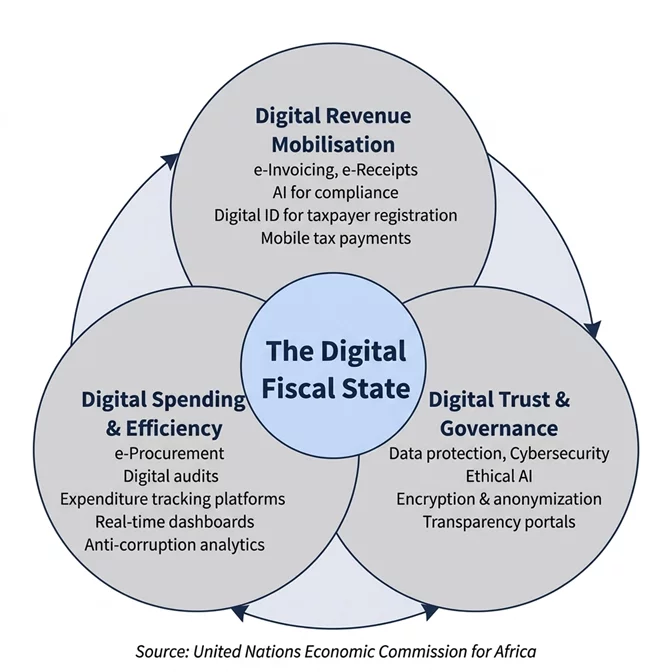
To respond effectively to rising issues in tax compliance and collection, the Tax Authorities began increasingly adopting and implementing digital tools and automated compliance technologies. Modern tax administration now requires stronger international cooperation, updated legal frameworks, and the ability to monitor digital economic activity in real time. All these technologies are vital for transforming African governments into modern fiscal states.
Key Technologies Driving Change
Mobile Technology and Internet Access
One of the main drivers of accelerated digital tax reforms in Africa is the rapid spread of mobile technology and internet access. For example, mobile money platforms, which are widely used across the continent, have made digital tax services more accessible, especially for taxable persons in remote or underserved areas. As a result of these technologies, taxable persons can now make payments and comply with tax obligations more conveniently through digital platforms, reducing administrative burdens and improving revenue collection for governments.
Advanced Digital Tools for Fraud Detection
As is the case these days, advanced digital tools such as AI, machine learning, blockchain, and big data analytics are becoming central to African Tax Authorities to combat underreporting, fraud, and informal economic activity. AI systems and data analytics can identify suspicious transaction patterns, detect inconsistencies in taxable persons' filings, and support risk-based audits. These technologies also allow Tax Authorities to process large volumes of data more effectively, identify fraudulent activities, and automate routine administrative tasks.
Blockchain, in particular, enhances transparency and security by enabling reliable tracking and verification of financial transactions. Although adoption remains at an early stage, blockchain technology has the potential to improve transaction traceability and reduce fraud risks in VAT systems.
E-Invoicing for Real-Time Transaction Monitoring
Another influential technology reshaping African tax systems is the fast-paced adoption and implementation of e-invoicing requirements to monitor transactions in real time and automatically verify VAT declarations. DR Congo, Namibia, Cameroon, Togo, Nigeria, South Africa, Gambia, Kenya, Cape Verde, Burkina Faso, Tunisia, Angola, Egypt, Ghana, and Zimbabwe, all these countries either have an e-invoicing system in place or are actively working on developing one.
Cloud Computing for Administrative Efficiency
Cloud computing and integrated digital tax platforms are further improving administrative efficiency across Africa. Many governments now offer online portals that allow businesses to register, submit returns, make payments, and communicate with authorities electronically. By developing such a centralized system, critical data can be accessed and facilitated in cross-agency cooperation faster.
Future Outlook of the African Tax Landscape
Based on all the data, it is apparent that African governments are increasingly prioritizing taxpayer-centered digital services and automated filing systems to reduce compliance costs and improve the user experience. There is no doubt that African countries will continue investing in digital infrastructure to improve revenue collection while adapting tax systems to rapidly evolving digital economies.
As digital trade expands, African countries are also expected to intensify efforts to tax cross-border digital services more effectively. One of the key elements to increasing tax efficiency is the further deepening of the tax transparency framework, which has made substantial progress since the establishment of the Africa Initiative in 2014.
Through increased cooperation and capacity-building efforts, African countries have and will further strengthen their ability to implement international tax transparency standards and use them to improve domestic tax enforcement. One of the pivotal points of the Initiative is the implementation and effective use of the Exchange of Information on Request (EOIR) standard.
Although the road to fully digitized and automated VAT systems is long and complex, the direction of reforming VAT regimes is clear. Technology is at the center of all changes in the African tax landscape, and over time, these innovations may fundamentally transform how governments interact with taxable persons and how authorities manage fiscal policy in the digital age.
Source: African Tax Administration Forum, Baker McKenzie, United Nations Economic Commission for Africa, Deloitte, West African Tax Administration Forum, Inter-American Center of Tax Administrations, VATabout, OECD