The last couple of years has shown perhaps the most rapid rates of business digitalization. Many companies that wanted to retain operations were quick to move their processes online in response to the pandemic. Some estimates show that almost 90 per cent of companies saw digitalization as vital. The VAT industry and VAT-related processes at the country level were no exception.
Even though the tax regime cannot be changed in an instant, national tax offices in different countries have noticed that they need to urgently react to changes in the economy, led by increasing volumes of digital services.
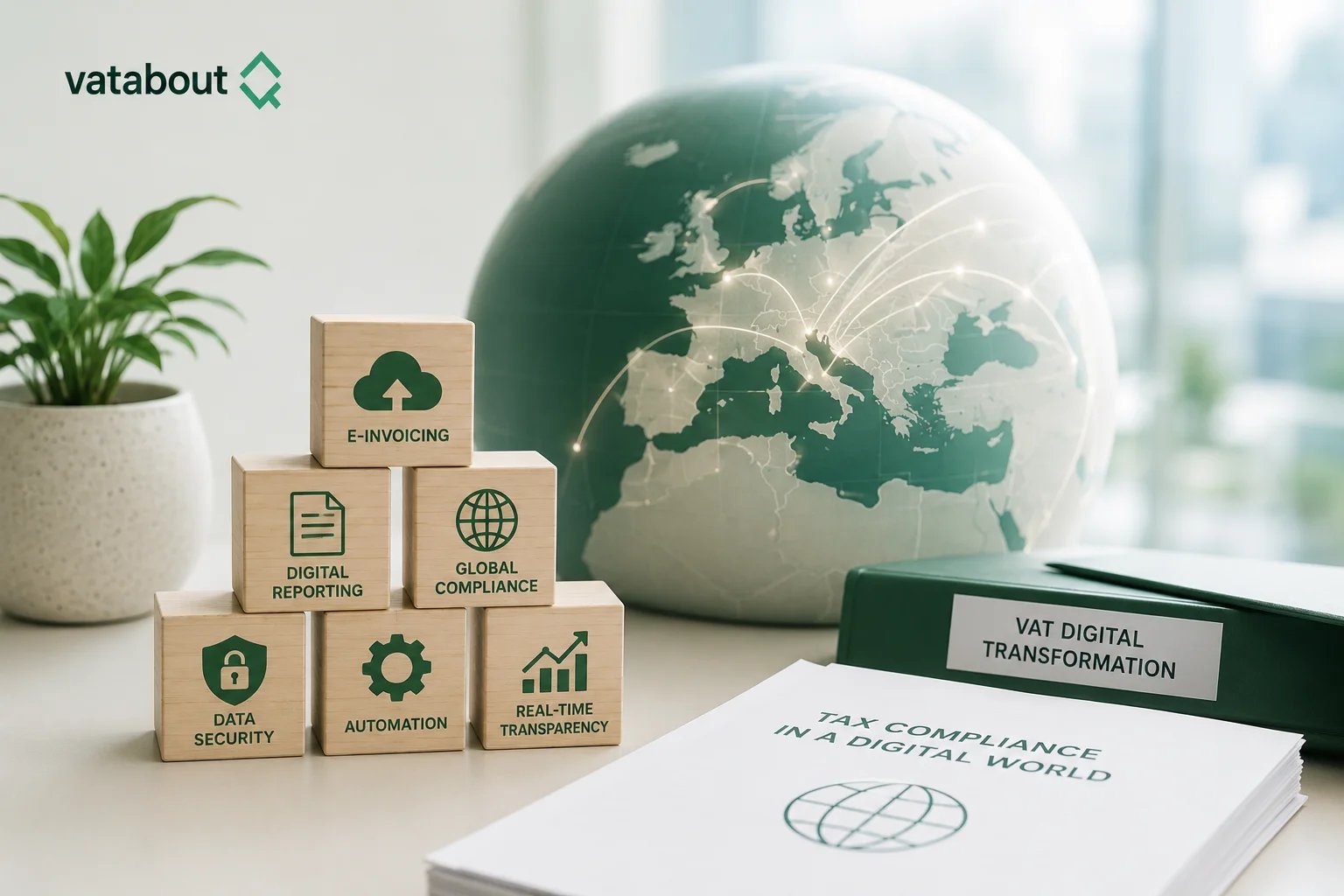
The examples of digitalization of tax-related processes are vivid in Europe. Some European countries, such as Spain, Hungary, Italy, and soon – Greece and Portugal, have already adopted the OECD SAF-T transaction reporting standard – making putting in place systems for live invoice reporting via e-invoices.
Requirements for live digital invoicing might be a blessing for some and a curse for businesses that are not ready to move their processes online. Both time and resources are needed to implement the required processes, which can cause temporary but significant strain for companies. In such cases, businesses typically choose either to develop their invoicing technology, integrate a 3rd party software, or outsource compliance to expert teams. All of the choices, or their combination, have an array of pros and cons, including safety issues, price, and such.
At the same, other areas of tax compliance are being standardized and digitalized, too. With Import One Stop Shop (IOSS) and OSS in place and the simplification of VAT reporting for distance sellers setting the bar high, companies in other areas expect digitalized processes to bring similar benefits. Among them, it is awaited until technology-enabled procedures allow for faster cross-border payments and clearance so that international sales get no more cash flow issues for paying the Tax Offices on time.
We'd love to hear your thoughts on this transition. How has digitalization affected your business's VAT processes? Share your experiences and challenges in the comments below!