
The effect of AI on business operations is apparent. While many tax experts focus on AI's role in compliance, the concept of zero-person companies, businesses run entirely by AI, could have a profound future impact on VAT, GST, and sales tax rules. Even though the idea is still in its early stages, with the rise of AI agents, it is easy to imagine these fully independent proactive software handling all operational and executive decisions. However, this raises one critical question: how does that affect the existing VAT systems?
The Concept of Zero-Person Companies
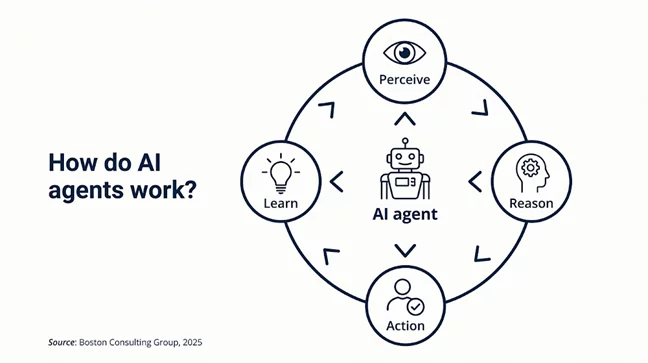
In November 2025, KPMG Netherlands and the University of Amsterdam (UvA) released the results of an experiment exploring whether a business could operate entirely without human involvement by relying on AI. The researchers developed AI agents acting as autonomous digital workers capable of planning, deciding, and executing tasks without human input. The main goal was to create a fully self-operating organization where AI handles everything from operations to management.
The “zero-person company” project was designed as a scientific experiment to identify both the capabilities and the constraints of autonomous AI systems, especially in complex organizational settings. As part of the experiment, researchers observed how AI agents perform in a controlled company-like environment. Based on the performance, researchers also gained data on how similar systems could be used across industries such as accounting, public administration, and support services.
The experiment was set to explore the kind of business a fully AI-driven organization might create and which strategic decisions the CEO AI agent will make. The result? AI agents decided to launch a webshop focused on personalized AI-generated art. The researchers concluded that a small team of five AI agents can build business plans and operate continuously without rest, demonstrating advantages such as running multiple meetings simultaneously and processing large amounts of detail beyond human cognitive limits.
While the limitations became visible as the experiment progressed, the experiment itself suggests that AI-driven organizations could significantly reshape labor markets, legal responsibility, and institutional trust. And tax compliance may not be exempt from that.
Core VAT Concepts at Stake
If a team of AI agents creates an online store, manages inventory, and handles all VAT obligations, it raises questions about who qualifies as the taxable person, where the place of establishment lies, and whether a fixed establishment exists.
Taxable Person for VAT Purposes
Currently, no country will allow the existence of a company without a real, living person being connected to it. This person can be a founder, CEO, or director. The human representing the company bears legal responsibility for it. Even when software is used in day-to-day business operations, there is an individual behind the company using that software. With AI agents, this framework breaks down since there is no person or fixed address to anchor legal responsibility.
Place of Establishment
Determining the place of establishment for VAT purposes in a zero-person company presents significant challenges. In our scenario, the AI agent executes all operational tasks, and the company has no employees. In addition, AI agents typically operate through a distributed cloud infrastructure without a specific geographic location.
Put differently, AI-led companies can operate across multiple jurisdictions simultaneously, without a clear physical or human presence. Although the registered office can indicate where a business is established, under the Court of Justice of the European Union (ECJ) case law, the registered office alone is not always a decisive factor. More specifically, without real management activity, the registered office is not enough to determine where the business is established for VAT purposes.
Fixed Establishment Rules
In the EU, for a company from one EU country, for example, Germany, to establish a fixed establishment in another EU country, such as Italy or France, a sufficient degree of permanence and a suitable structure in terms of human and technical resources that allows the business to receive or supply services is required.
As with the concepts above, human resources are essential to establishing a fixed establishment. Moreover, ECJ has consistently held that technical infrastructure alone, without human resources, cannot create a fixed establishment. In practical terms, a business may have infrastructure in another EU country, but without human resources there a fixed establishment does not exist. As a result, an AI-operated business that uses cloud infrastructure based in multiple countries cannot have a fixed establishment in any of those countries.
Impact on Other VAT Obligations
Apart from these key VAT concepts, the zero-person company experiment raises questions regarding other VAT obligations, including invoicing, reporting, and payment. All these obligations are directly linked to a taxable person, either an individual or a business. If no human or company is directly involved in the transaction, and there is no basis to determine the place of establishment or the existence of a fixed establishment, questions arise as to who is liable for VAT, where, and when.
Should AI Agents Have Legal or Tax Status?
Even though all of this is based on a scientific experiment, not originally focused on taxation, and is still more theoretical than realistic, the fact that an AI agent can fully come up with a business idea, develop a business plan, and execute it on their own makes the matter a bit more complex. Moreover, the zero-person company model complicates analysis and challenges the existing VAT rules.
This brings us to the essential question: should an AI agent have legal or tax status? An answer may lie in the concept of electronic personalities (e-personalities), which emerged from a draft initiative by the European Parliament as part of its work on civil law rules for robotics and AI.
In 2017, the Parliament’s Legal Affairs Committee proposed introducing a legal status of e-personalities, a legal status for AI agents analogous to that of companies. As noted by the Parliament, this would create specific legal rights and responsibilities for AI agents, but without giving human rights to robots and software.
Even though the idea faced strong resistance at the time and lost momentum at the EU level, a new hybrid model might emerge in the future. The model in which advanced AI systems could be treated as a form of legal construct similar to companies, where responsibility is distributed across developers, operators, and users rather than assigned to the AI itself. The adoption of such a model would have a significant impact on VAT rules and regulations, not just in the EU but worldwide.
Source: KPMG, European Commission - How does VAT work?, European Commission - Taxable persons under EU VAT Rules, Cornell University - AI Agents Under EU Law, Implementing Regulation (EU) No 282/2011, VATabout - EU VAT Fixed Establishment, VATabout - ECJ Berlin Chemie Case, Maastricht University, European Parliament