
While transfer pricing and VAT are typically treated as separate areas of taxation, governed by different rules and designed to fulfill different policy objectives, the two regimes increasingly intersect in practice, particularly in the context of cross-border intra-group transactions. Not understanding the dynamics and interconnection between these two regimes may cause significant risks, including additional tax liabilities, penalties, and disputes for many multinational enterprises (MNEs).
Understanding the Transfer Pricing Basics
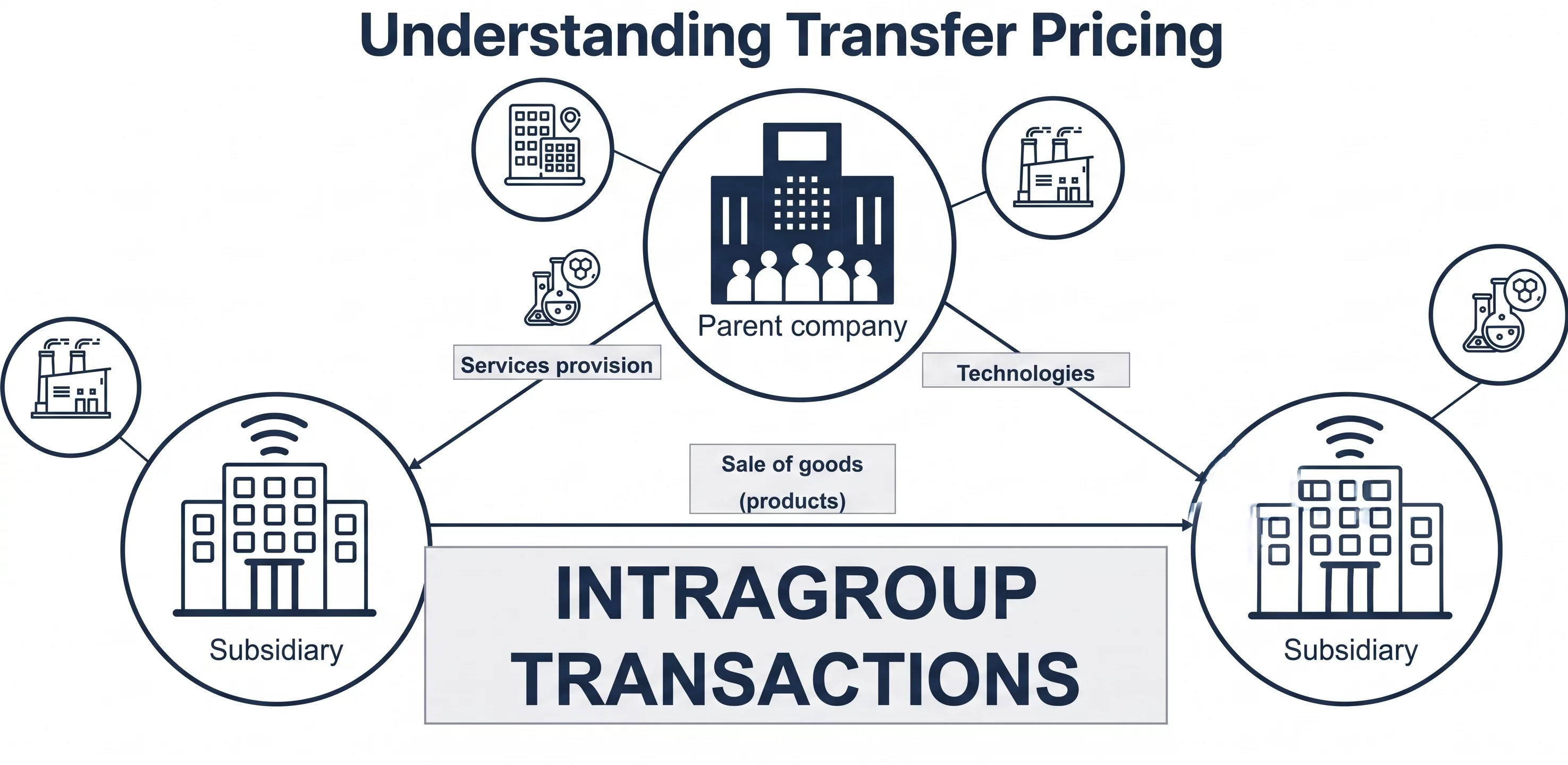
Before moving on to the interplay between transfer pricing and VAT, it is necessary to clarify what transfer pricing is and how the regime functions. Essentially, transfer pricing governs how related entities within a multinational group price transactions such as goods, services, or intellectual property. At its core is the arm’s length standard, which requires that intra-group transactions reflect conditions that would have been agreed upon between independent parties under comparable circumstances.
In other words, the objective of transfer pricing is to ensure that transactions between related entities reflect what independent parties would have agreed, primarily to allocate profits correctly for corporate income tax purposes.
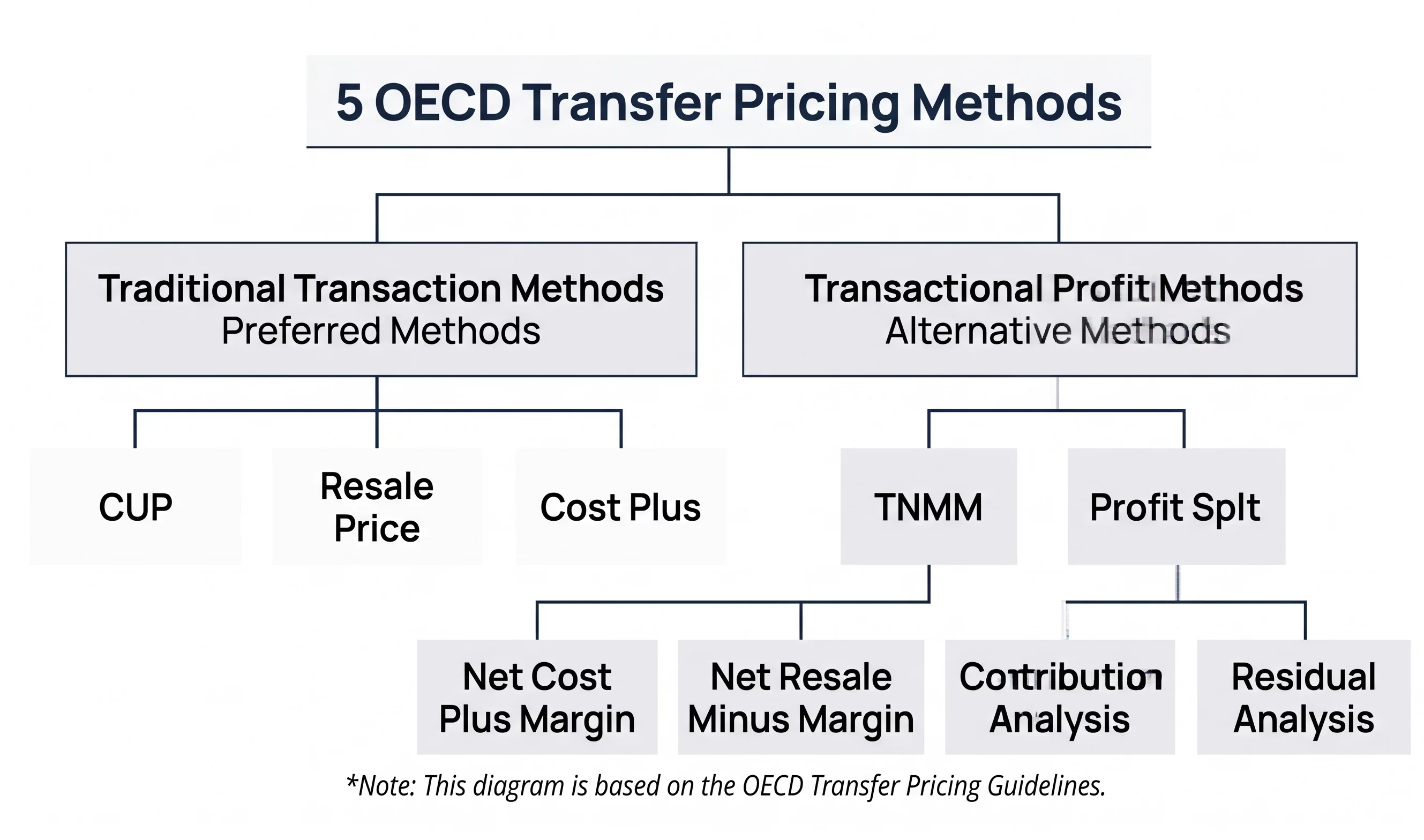
To comply with this principle, MNEs typically apply OECD-endorsed methods, such as Comparable Uncontrolled Price (CUP) or the Transactional Net Margin method. In either case, selecting the transfer pricing method is not a mechanical exercise but a case-by-case assessment aimed at identifying the most appropriate approach for the specific transaction.
As the OECD noted, there is no single method that works in all situations, and the goal is not to eliminate alternatives one by one. Instead, MNEs should focus on selecting the method that provides the most reliable result given the facts and circumstances, without needing to prove that other methods are inappropriate.
Where Transfer Pricing and VAT Intersect
In contrast to transfer pricing, VAT is generally concerned with the actual price charged in a transaction, as it is a consumption tax based on the consideration paid or payable. As such, the VAT does not question whether that price is at arm’s length. However, both transfer pricing and VAT apply to the same underlying transaction, yet they assess it from fundamentally different perspectives: transfer pricing focuses on arm's length value for profit allocation purposes, while VAT is based on the actual consideration paid.
Where there is a transaction between related parties, for example, between a parent company and its subsidiary, there is a certain risk of tax avoidance. Given that the transfer pricing adjustments effectively change the value of a transaction after it has taken place, the question arises of whether VAT should also be adjusted to reflect the revised consideration.
The key issue in this case is whether the adjustment constitutes consideration for a specific supply of goods or services or merely reallocates profits for tax purposes. In the first case, a corresponding VAT adjustment may be required. In contrast, if the inter-group transaction is only a reallocation of profits for tax purposes, VAT remains unaffected.
Key ECJ Case Law
In 2017, the European Commission issued a Working Paper entitled “Possible VAT implications of Transfer Pricing”. One of the key remarks in that paper was that, even though the EU VAT Directive introduced the arm's length principle, there is an inherent tension between transfer pricing and VAT because they are built on different valuation concepts.
While the Commission's 2023 proposal or harmonised transfer pricing rules are still pending, the Court of Justice of the European Union (ECJ) has made several notable decisions in recent years clarifying the intricate complexities surrounding transfer pricing and VAT.
SC Arcomet Towercranes SRL v Romanian Tax Authority (Case C‑726/23)
The Arcomet case raised one of the most crucial issues: should a transfer pricing adjustment, under certain conditions, be subject to VAT? When Arcomet Romania, a crane rental company, was invoiced by its parent company, Arcomet Belgium, to adjust its operating profit margin by more than the predefined 2.74% benchmark set in a transfer pricing study, the Romanian Tax Authority denied Arcomet Romania the right to deduct VAT on these settlement invoices.
The main reason was that it was determined that services were not demonstrated as actually provided or necessary for Arcomet Romania's taxable activities. The ECJ ultimately concluded that transfer pricing “top-up” payments made under the agreement between the parties fall within the scope of VAT, as they constitute remuneration for services rather than mere internal profit adjustments.
The key points for such a decision were the existence of a direct link, that is, a legal relationship, between the parties, that the remuneration paid reflects the actual consideration for the services supplied, that activities performed by Arcomet Belgium extended beyond mere shareholding, and that the remuneration was neither voluntary nor uncertain, despite being variable as it was dependent on the profits and losses of Arcomet Romania in a given year.
Högkullen AB v Tax Agency (Case C‑808/23)
In the Högkullen case, the parent company provided management and administrative services to its subsidiaries using a cost-plus transfer pricing method, where operating costs were allocated to the services, and a profit margin was added. While certain service-related costs were determined by using an allocation that attributed a percentage of general business expenses, the shareholder-related costs were not included in the calculation.
In 2016, the company incurred a total cost of nearly EUR 2.5 million, with about half of the cost subject to VAT and the other half exempt from VAT or considered non-taxable. Nonetheless, the company deducted the full input VAT on all costs on which VAT had been charged, including on expenses categorized as ‘shareholder’ costs. The Swedish Tax Authority argued that the company charged its subsidiaries a price below the open market value for the services provided, and assessed the taxable amount based on Högkullen’s total costs for that year.
This resulted in two key questions raised before the ECJ: whether national rules may systematically treat all services provided by a parent company to its subsidiaries as a single, unique supply, and whether it is allowed to include all of a parent company’s expenses, including shareholder-related and capital-raising costs, when determining the taxable amount of services supplied to subsidiaries. The ECJ ruled that, for VAT purposes, each service must be assessed individually, and the taxable amount should reflect the open market value.
Weatherford Atlas v Romanian Tax Authority (C‑527/23)
As part of the global Weatherford, Weatherford Atlas provided drilling services in Romania. After the merger, the Romanian entity took over Foserco SA, a Romanian-based company, which previously purchased such services from other group companies. Following this merger, the Romanian Tax Authority reviewed the input VAT deducted on these administrative services and concluded that they were not exclusively used for the taxable transactions of Weatherford Atlas, but were instead also made available to other companies within the group.
Consequently, the Tax Authority denied the right to deduct input VAT, claiming that the services were not necessary or appropriate for the company’s own taxable activities. This led to a question of whether, under the EU VAT Directive, a taxable person can be refused the right to deduct input VAT simply because the purchased services are also used by other group entities, or because the Tax Authority considers them not strictly necessary for the recipient’s taxable output transactions.
The ECJ found that the EU VAT Directive does not allow national rules or administrative practices that deny the right to deduct VAT solely because services were supplied to multiple companies within a group or because the tax authority considers those services unnecessary. Moreover, the ECJ emphasized that the key requirement is the existence of a direct and immediate link between the input services and the taxable person’s own transactions.
Stellantis Portugal v Portuguese Tax and Customs Authority (C‑603/24)
The Stellantis case is one of the highly anticipated cases still being discussed and analyzed by the ECJ. At the center of the case is the question of whether certain price adjustment mechanisms fall within the scope of a “supply of services for consideration” for VAT purposes.
The dispute concerns the contractual arrangements between Stellantis and European manufacturers within the former General Motors Group, under which the parties agreed in advance on a mechanism to adjust the sale price of vehicles to ensure that a minimum profit margin was achieved. Additionally, these predefined adjustments were implemented through the issuance of credit or debit notes between the parties.
Following the tax audit, the Tax Authority reviewed the treatment of after-sales costs such as repairs, warranties, and roadside assistance, and concluded that these costs were initially borne by the applicant but were subsequently recharged to the original equipment manufacturers (OEMs), who were responsible for vehicle production. As a result, the Tax Authority considered that Stellantis had supplied taxable services to the OEMs, treating the recovery of these costs as consideration for services subject to VAT.
While the ECJ is still to make a final decision in this case, the Advocate General addressed this issue and provided for the first time a comprehensive approach to the VAT treatment of transfer pricing adjustments. The key distinction, as noted by the Advocate General, is that changes which relate solely to the agreed price of an existing supply affect the taxable base of that supply, whereas only independent, reciprocal service arrangements can constitute separate supplies for consideration under VAT law.
Practical Recommendations for Businesses
Considering the complex interaction between the transfer pricing and VAT, these areas should no longer be managed in isolation, as inconsistencies between the two can create significant exposure and may result in significant multi-million financial penalties. To ensure compliance, MNEs must define intra-group agreements clearly, including the nature of transactions and any potential adjustments.
Furthermore, MNEs should note in agreement how transfer pricing adjustments will be treated for VAT purposes, including whether they relate to specific supplies. Based on the ECJ ruling, it is clear that documentation plays a critical role. Therefore, supporting evidence that demonstrates the existence of underlying services, the basis for adjustments, and the link or lack thereof to identifiable transactions is necessary.
Source: European Commission - Transfer Pricing in the EU, PwC - The interplay between Transfer Pricing and VAT, PwC - Transfer Pricing and VAT alignment, OECD, European Commission - Possible VAT implications of Transfer Pricing, VATabout - Should transfer pricing adjustments be subject to VAT?, VATabout - ECJ Ruling Limits VAT Assessment of Parent-Subsidiary Services, ECJ Case C‑527/23, ECJ Case C‑603/24 - Opinion of the Advocate General